Film · Second Sino-Japanese War
Devils on the Doorstep
Guizi Lai Le
The production
Released 2000
China · Film
The history
1944–1945
Villagers in occupied China are left to guard a Japanese prisoner and his translator, with tragicomic and tragic consequences · 1944–1945
- 🎬 Director
- Jiang Wen
- ⚔️ Campaign
- Japanese occupation of China
- 📍 Theater
- China
- 🎭 Genre
- Historical Drama, Civilian
- 🌍 Country
- China
- 🕐 Runtime
- 139 minutes
- 🎞️ Perspective
- Civilian
- 📺 Production type
- Film
- 🗺️ Battle
- Information unavailable
Synopsis
In a small village occupied by Japanese forces, a mysterious figure forces a peasant to hold a captured Japanese soldier and his Chinese translator hostage, throwing the community into a farcical yet increasingly dangerous predicament. The comedy curdles into tragedy as the villagers ultimately face brutal reprisal.
Historical Context
The film depicts the Japanese occupation of rural China near the end of the war, a period marked by uneasy coexistence between occupying garrisons and local villagers punctuated by sudden mass violence and reprisal killings.
Historical Accuracy
The story and characters are fictional, used allegorically to explore Sino-Japanese wartime relations rather than to depict specific documented events.
The Real Battle
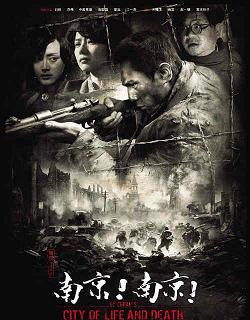
After the fall of Shanghai, Japanese forces advanced up the Yangtze and captured the Chinese capital, following it with weeks of mass killing and rape of civilians and disarmed soldiers.
Chinese defences collapsed on 12–13 December 1937. A small group of Western residents established the Nanjing Safety Zone, which sheltered a substantial part of the remaining civilian population. Estimates of the dead vary widely between Chinese, Japanese and Western scholarship.
The Battle and Massacre of NanjingCast & Crew
Directed by Jiang Wen
Cast: Jiang Wen, Kagawa Teruyuki, Yuan Ding, Jiang Hongbo
Where It Fits in WWII
Positioned at 1944–1945 within the Second Sino-Japanese War phase of the war, as part of the Japanese occupation of China. This is entry 109 of 150 in the chronological archive.
- Japanese occupation
- village life
- black comedy
- wartime atrocity